Tree Moving: Movers, Diggers and How It Works
Tree Moving: Movers, Diggers and How It Works
Tree Moving, Tree Mover, Tree Digger: Sorting Out the Terminology
Search for help relocating a large tree and you will quickly run into a cluster of terms used interchangeably by contractors, nurseries, and homeowners alike: tree moving, tree transplanting, tree spading, and tree digging. They all describe the same core operation, which is using a specialized machine to cut a defined root ball, lift the tree intact, and set it down in a new location. Understanding the vocabulary helps you communicate clearly with whoever is doing the work, and it helps you shop intelligently for equipment if you are the one doing the work.
What “Tree Moving” Means
Tree moving is the broadest of the four terms. It covers any method of relocating a living tree, from hand balling-and-burlapping on small specimens to full mechanized transplanting on mature trees. In practice today, most people who say “tree moving” mean the mechanized version: a tree spade on a truck, trailer, or skid-steer doing the digging and carrying.
What “Tree Mover” Means
Tree mover can refer to the person doing the job (a contractor, a nursery operator, a landscaping company) or to the machine itself. Context almost always makes it clear. A homeowner asking for “a tree mover” wants a contractor with equipment. A dealer describing what is mounted on a truck is talking about the machine. Both uses are correct.
What “Tree Digger” Means
Tree digger is a regional nickname for a tree spade, especially common in the Southeast. In Florida, North Carolina, South Carolina, and Tennessee you will often hear nursery workers and landscapers call the unit a tree digger. The name puts emphasis on the cutting and excavating side of the job rather than the transport side, but the machine and the process are identical to what others call a tree spade.
What “Tree Spading” Means
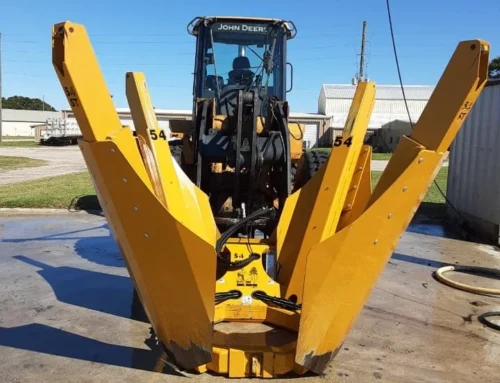
Tree spading is the most precise term. It refers specifically to using a tree spade (a machine with curved steel blades arranged around the trunk) to cut, cradle, and transport the root ball. When a contractor advertises tree spading, they are telling you they own the machine and perform the full dig-and-transplant operation themselves. It is the term professionals use when they want to be clear about the method.
How a Tree Spade Works

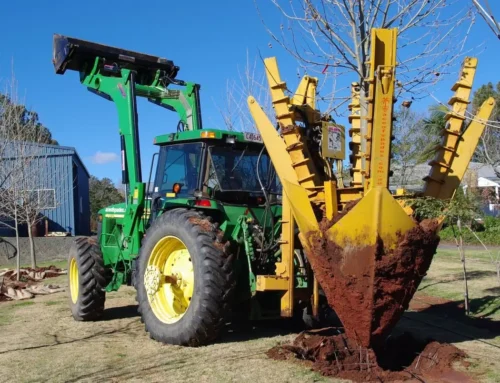
A tree spade is built around a set of large, curved steel blades, typically three or four, mounted in a radial pattern around a central frame. The operator lowers the unit over the tree and drives the blades into the ground simultaneously, carving a cone-shaped plug of compacted soil that holds the root system intact. Once the blades close underneath the root ball, the machine lifts the entire plug, tree included, and carries it to the destination. A hole is prepared at the new site beforehand, often cut with the same machine, so the root ball drops into a space shaped to receive it. Compared to hand digging, the process is fast. Compared to bare-root pulls or chainsaw cuts, it is far less traumatic to the tree.
The size of the root ball the machine cuts is fixed by the blade diameter of that specific model. Matching the right blade size to the tree being moved is the first and most important variable in the whole operation.
Truck-Mounted, Trailer-Mounted, and Skid-Steer Tree Spades
Tree spades come in three main configurations, each suited to different job types and site conditions:
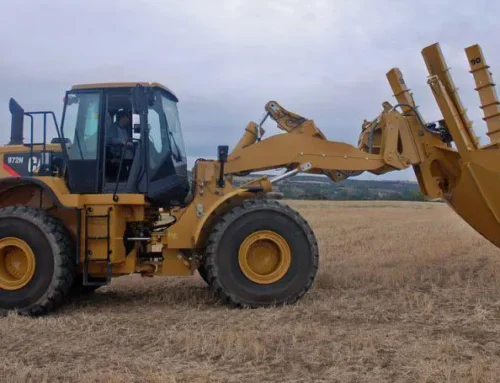
- Truck-mounted tree spades attach directly to a heavy-duty truck and can transport a tree on the road between properties. They are the standard tool for production nurseries and large landscape contractors who move trees frequently over distance.
- Trailer-mounted tree spades are towed behind a truck and give contractors flexibility in vehicle choice. They work well for operations that want to separate the transport power from the digging unit or that already have a suitable tow vehicle.
- Skid-steer tree spades attach to a skid-steer loader and are built for tight sites where a large truck cannot maneuver: residential yards, urban parks, streetscapes, and confined commercial lots. They made mechanized tree moving practical in settings that were previously limited to hand work.
Big John Manufacturing, based in Heber Springs, Arkansas, has produced all three configurations since 1975. Each model line is engineered to handle specific tree size ranges and site conditions.
What Determines Whether a Tree Can Be Successfully Moved

Not every tree is a good candidate for mechanical transplanting. Five variables determine whether a move is likely to succeed.
Trunk Caliper
Trunk caliper, the diameter of the trunk measured at a standard height, is the primary sizing variable. The tree spade’s blade diameter must match the caliper of the tree. A blade that is too small cuts too close to the trunk, severs structural roots, and reduces survival odds significantly. Manufacturers publish caliper capacity ranges for each model, and working within those ranges is the foundation of a good transplant. If the tree has outgrown the largest available machine, mechanical spading is no longer an option.
Species
Species matters. Some trees transplant reliably and bounce back quickly. Others are sensitive to root disturbance and require more careful timing and aftercare to survive. Live oaks, for example, move well in many conditions in the Southeast. Some pines transplant best when young. Maples, elms, and most ornamental species are generally forgiving. Knowing the species before scheduling a transplant lets the contractor plan timing and post-move irrigation accordingly.
Root Ball Ratio
The root ball that comes out of the ground must be proportionate to the canopy above it. Too small a ball relative to the crown means too little water-absorbing root surface to support the foliage during transplant stress. Machine manufacturers and industry practice both address minimum ball-to-caliper ratios. A skilled operator follows those guidelines, and a property owner or developer should confirm the operator is doing so before work begins.
Season and Timing
Trees move best when they are not under active growth stress, which makes timing as consequential as the machine. Late fall, winter, and early spring are preferred in most climates because the tree is dormant or close to it. In Florida and across the lower Southeast, mild winters extend the practical transplanting season, but summer heat still demands careful irrigation after the move. In the Carolinas and Tennessee, late fall and early spring moves take advantage of cooler soil temperatures and reduced transpiration demand. A summer move is possible with proper water management but carries more risk than a cool-season move.
Site Access
The machine has to physically reach both the source tree and the destination hole. A large truck-mounted unit needs a clear path of adequate width and overhead clearance. That is exactly why skid-steer tree spades were developed: to bring mechanized transplanting into spaces where a truck cannot go. Before any job is scheduled, an experienced contractor will assess access at both ends of the move.
Tree Moving: Common Questions
What is a tree digger?
Tree digger is a regional nickname for a tree spade, most common across the Southeast. The machine and the process are identical to what other regions call a tree spade or a tree transplanter. The name simply emphasises the cutting side of the job rather than the carrying side.
Is tree moving the same as tree transplanting?
In practice, yes. Tree moving is the broader everyday term and covers any method of relocating a living tree. Tree transplanting is the term used more often in horticulture and by contractors. Both usually describe the same mechanised operation performed with a tree spade.
How big a tree can be moved with a machine?
The limit is trunk caliper, not height. Each spade model publishes a caliper capacity, and the blade diameter has to be matched to it. Trees well above ten inches in caliper are moved routinely with truck-mounted equipment. Once a tree outgrows the largest available machine, mechanical spading stops being an option.
How long does it take to move a tree?
The dig, lift and set can take under an hour for a mid-size tree when both sites are accessible and the destination hole is pre-cut with the same machine. The work around it, site assessment, access preparation and aftercare, takes far longer than the move itself and matters more to whether the tree lives.
Does a moved tree survive?
Usually, when the machine is sized correctly and the tree is watered consistently through the first growing season. The most common cause of failure is a spade too small for the caliper, which removes more root mass than the canopy can be sustained on. Season and species account for most of the rest.
Do I need a tree mover or a tree spade?
If you need one tree moved on your property, you need a contractor who owns the equipment. If you move trees as part of your work, you need the machine. Big John builds the machines and does not perform transplanting work, so the right contact depends on which side of that line you are on.
Finding a Tree Mover or Tree Spading Contractor Near You
If you are a homeowner, property manager, developer, or municipality that needs trees moved, the right starting point is a contractor, nursery, or landscape company that owns tree spading equipment. Search for “tree movers near me” or “tree spading near me” and ask directly whether the company owns a tree spade or subcontracts the work. In Florida, the Carolinas, and Tennessee, established nursery operations and larger landscape firms are the most common owners of commercial tree spading equipment.
Big John Manufacturing builds the machines; it does not perform transplanting services. If you need the work done on your property, a local contractor with the right equipment is your contact.
If Tree Moving Is Your Business
Contractors, nurseries, and landscape companies that move trees as a regular part of their work have two main paths to getting the right machine: buying new or buying certified pre-owned. Big John Manufacturing produces truck-mounted, trailer-mounted, and skid-steer tree spades at its Heber Springs, Arkansas facility and offers a certified pre-owned program for operations that want production-ready equipment at a lower entry cost.
The right model match starts with two questions: what is the largest caliper tree you expect to move, and what are the typical access conditions on your job sites? A Big John dealer can work through the model line with you based on those specifics. Whether you are adding a first tree spade to a small landscaping operation in Tennessee or building out a fleet to serve nursery customers across Florida and the Carolinas, getting the blade size and machine configuration right from the beginning saves time, reduces tree loss, and keeps jobs profitable.